
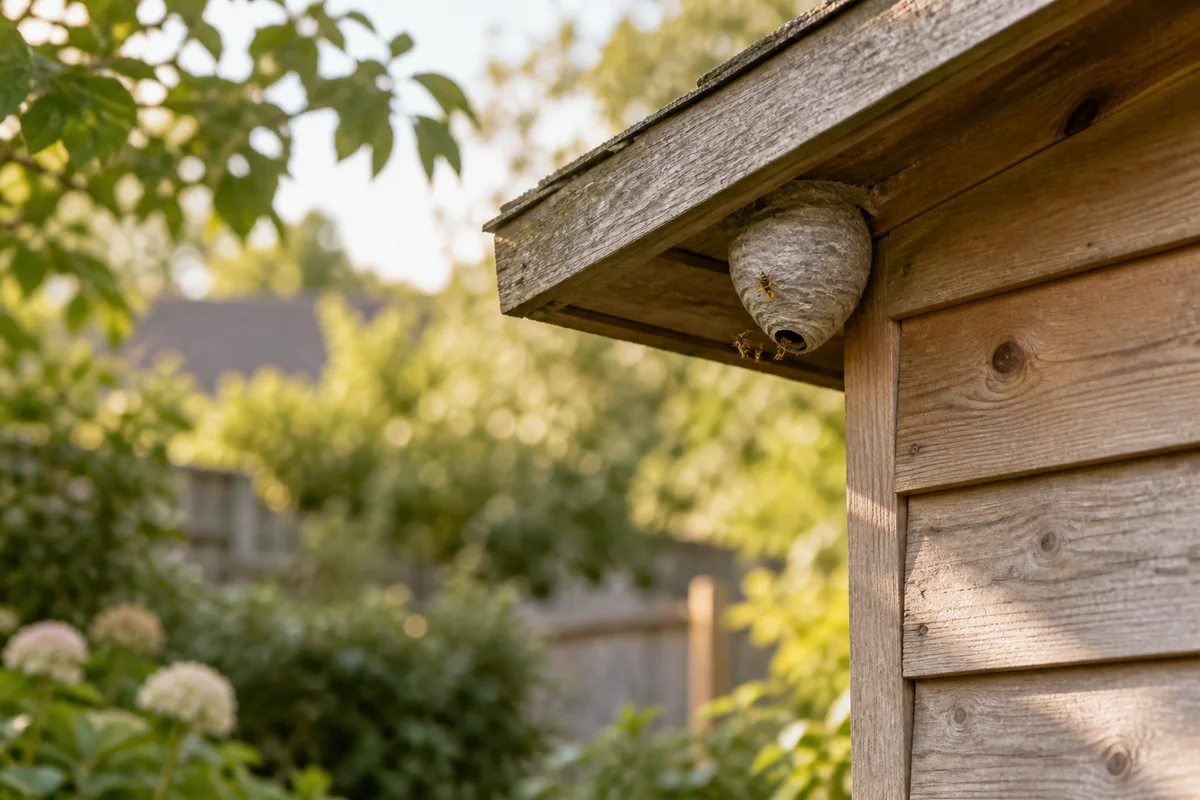
Give the area some space
If insects are repeatedly using a nest or entrance, keep people and pets away from that route. Choose another door or walkway where possible. Avoid moving garden furniture, mowing beside a ground opening or trimming a branch that holds a nest. The aim is to leave the site undisturbed while you arrange advice.
Describe the location
From a safe position, note whether the activity is under a roof edge, inside a wall, in the ground or on a branch. An approximate height and the nearest occupied entrance are useful. Tell the service contact whether you see a nest or only insects using a small opening. You do not need to climb a ladder or get a close photograph.
Leave the opening alone
An active entry in siding or a roof should not be plugged as a quick fix. A concealed colony can have connections to other building spaces. Explain if insects have appeared inside, and allow the inspection to establish the situation before access, treatment or repairs are decided.
Ask what the visit includes
Confirm whether the proposed work covers inspection, treatment, nest removal and follow-up. Height, access and the position of the nest can affect the scope. Ask how long to keep clear after the work and who will advise when an opening can be repaired. If the insects may be honey bees, ask about identification and suitable beekeeper options.
Further reading: Penn State Extension: nesting bees and wasps
Explore the related service